
Description
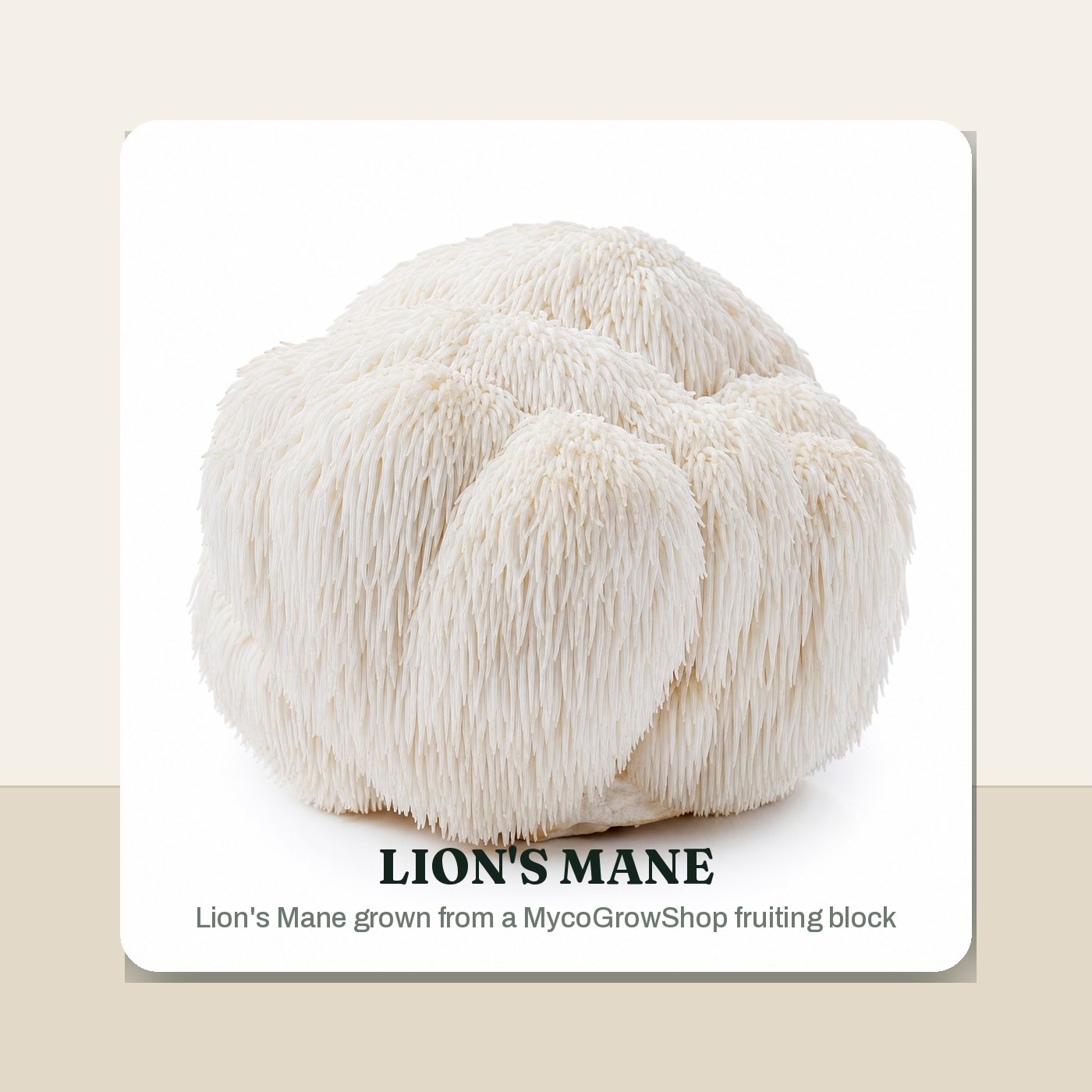
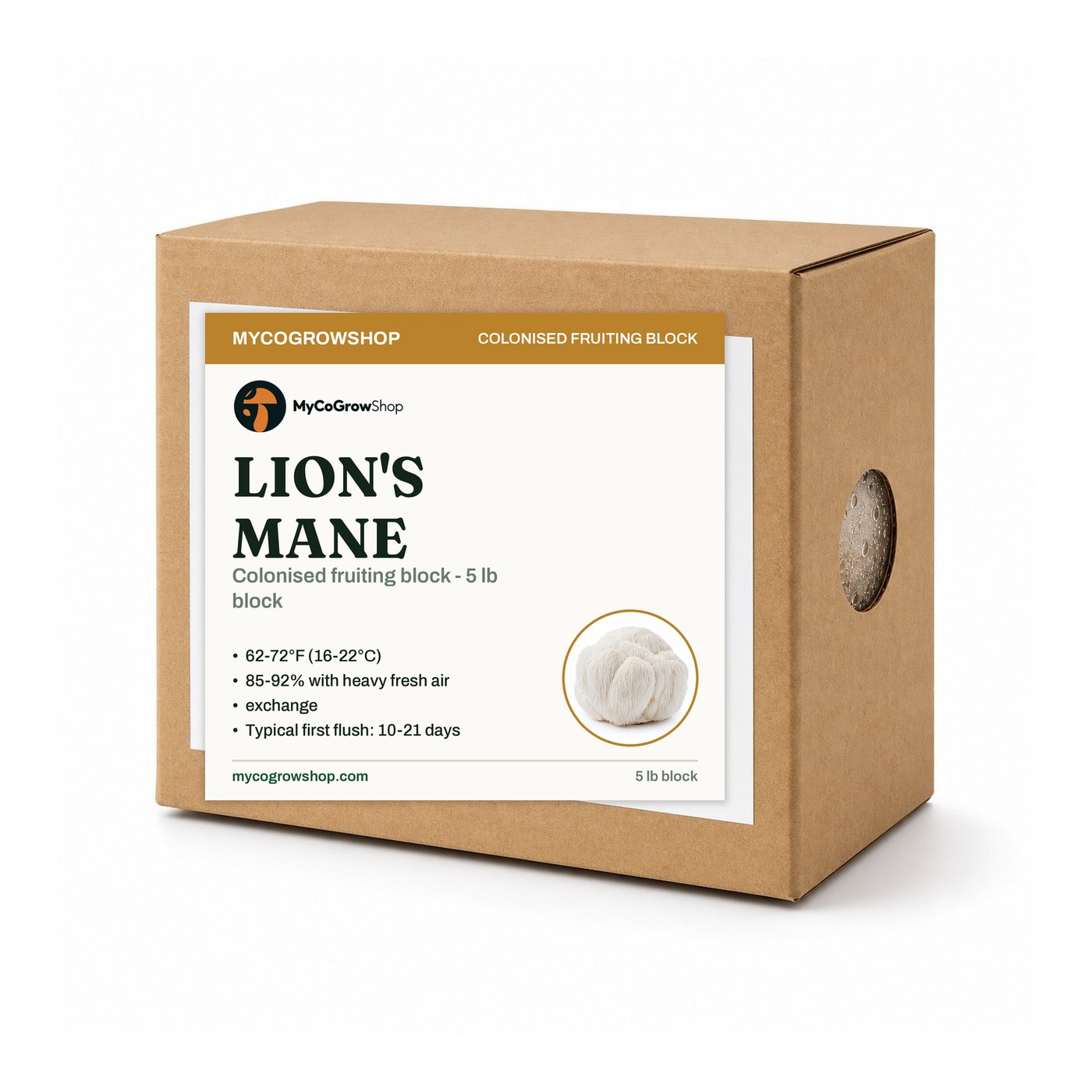
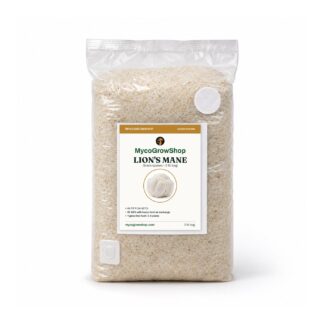
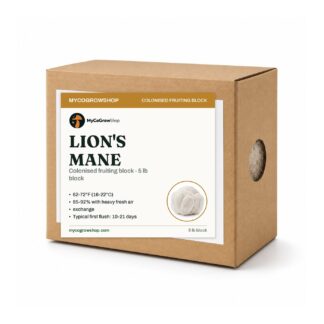
Lions Mane Colonised Fruiting Block – A fully colonised, rested lion’s mane ready to open and fruit – the same block as our kits, without the box.
Lions Mane Colonised Fruiting Block: what you get
Lions Mane Colonised Fruiting Block arrives as 5 lb, as the listing states it. Variations are sold as sealed or packed so it survives a courier, not just a shelf.
- 5 lb, as the listing states it
- sealed or packed so it survives a courier, not just a shelf
- the same photograph as the listing, so you know what arrives
How to use lions mane colonised fruiting block
Nothing about lions mane colonised fruiting block is difficult, and almost every failed grow we hear about breaks at one of four points: moisture, temperature swings, still air being taken for clean air, and opening things too early. These four steps cover lions mane colonised fruiting block in any shop-bought setup.
- Wipe the work surface and your hands, then let the alcohol flash off before anything sterile is opened.
- Work in still air: a fan or an open window carries spores into an open jar or bag.
- Keep consumables sealed with the patch or lid closed, and replace tape and patches rather than reusing them.
- Calibrate a hygrometer against a damp-salt test twice a season; flush counts are decided by the number you trust.
Storage and handling
Keep the pack sealed until you are ready to work, and write the delivery date on it – grain-based and live material are the two things nobody should use on memory.
Common questions
Do lion's mane blocks need a tent?
No, but they need air. A block sitting in a closed tub with the lid on will push long spines and go yellow. Fan it, or leave it under a shelf with room around it.
Can I grow two flushes from a 5 lb block?
Usually yes – a second, smaller flush two weeks after the first is normal, and a third is a bonus. Rest between flushes and keep it cool.
Why is my block yellow and dripping?
Yellowing with a wet sheen is the classic sign of stale, humid air. Dry it out a little, increase exchange, and cut back any misting directly onto the spines.
Usually ordered with Lion’s Mane Millet Grain Spawn – 3 lb and Lion’s Mane All-In-One Mushroom Grow Bag. More detail is in the Lion’s Mane Grow Kits archive. Lion’s Mane Grow Kits. Reviews are not enabled on the shop, so the honest answers are in the FAQ above. For the technique side we keep FreshCap growing notes open while writing these pages, and the sanitation notes for the consumables follow the FDA Food Code.
A rested 5 lb lion’s mane block on supplemented sawdust, sold without the box for growers who have shelf space and want a bigger flush than a counter kit gives. Needs fresh air more than it needs anything else.
What is in the box
- A finished 5 lb block: supplemented hardwood substrate, fully colonised and rested, sold without a decorative box
- You provide the humidity and the air. Open the bag, mist, and wait for pins
- Cheaper per pound than a boxed kit because you are not paying for packaging – the trade-off is a less tidy counter
- Ships unwrapped inside a ventilated carton; blocks are shipped at a stage where they will not be cooking in transit
How it works
- Unpack in a clean space, cut the bag open above the block and remove any loose surface plastic.
- Soak the block for 8-12 hours in cool water if the surface looks dry, then drain well.
- Stand it in high humidity with fresh air two or three times a day and keep 60-72°F for most species.
- Harvest whole clusters at the base, rest the block for a week, then re-soak for the next flush.
About Lion’s Mane (Hericium erinaceus)
Lion’s mane is the mushroom that changes people’s minds about growing at home. There are no caps and gills to get wrong, only a ball of white spines that hangs from the block like a beard. It is a hardwood specialist, which means it wants supplemented sawdust rather than straw, and it rewards fresh air more than almost any other kitchen species.
Conditions lion’s mane grows best in
- Fruiting temperature: 62-72°F (16-22°C)
- Humidity: 85-92% with heavy fresh air exchange
- Colonises the block in 10-16 days at room temperature
- First flush typically 10-21 days after fruiting starts
- Signs of stale air: long, thin spines and a sour smell trapped under the lid
When to pick: Cut the whole cluster at the base with a clean knife when the spines are still white and about an inch long. Once it turns yellow and dusts the counter with spores it is past its best. A second flush usually follows two weeks later if the block is kept damp and cool.
In the kitchen: Sautéed in butter with salt, alone. It takes to browning better than any other mushroom and is the standard stand-in for seafood-style dishes because the spines hold a crust.
What to expect from this grow
A rested, fully colonised block normally pins within a week or two of being opened. Blocks that have been colonising too long can flush heavily and then fade; two flushes from a 5 lb block is a normal outcome, not a shortfall.
Specification
| Product type | Colonised fruiting block |
|---|---|
| Stage | Colonised fruiting block |
| Size | 5 lb block |
| Species | Lion’s Mane (Hericium erinaceus) |
| Substrate it grows on | Supplemented hardwood sawdust (master’s mix) |
| Fruiting range | 62-72°F (16-22°C) |
| Difficulty | Easy |
| Shipped weight | 6.4 lb |
| Package size | 10 × 6 × 6 inches |
| SKU | MGS-0023 |
Part of our Mushroom Grow Bags range. Questions about lion’s mane? Email [email protected] or call +1 970-909-8532.
Other formats for Lion’s Mane: Ready-to-fruit grow kit, All-in-one grow bag, Grain spawn. Start with a guide if you are not sure which one fits your space.
Reviews
There are no reviews yet.