
How to Grow Mushrooms at Home How to Grow Mushrooms at Home Short version: pick a ready-to-fruit kit or an all-in-one bag, give it a cool bright corner, keep the air humid and moving, and cut the cluster at the right stage.
How to Grow Mushrooms at Home: what this page covers
- Step 1 – choose the starting point, not the mushroom – Never grown anything, want mushrooms this week: a ready-to-fruit kit (blue or pink oyster, or lion’s mane) Comfortable with a spray bottle and a two-week wait: an all-in-one grow bag, spawn included You already make grain spawn or want to run many bags: sterilised substrate bags plus spawn You have a garden and years: shiitake plug spawn for hardwood logs.
- Step 2 – set up a place, not a project – One shelf, out of direct sun, off a heating vent, with a thermometer on it.
- Step 3 – the three jobs that matter – Humidity: mist the air and the box walls twice a day once pins appear; standing water on pins is worse than dry air Fresh air: open the lid fully two or three times a day.
- Step 4 – harvest, rest, repeat – Cut the whole cluster at the base with a clean knife, at the stage described on the product page – before it spends itself dropping spores.
- Start with a ready-to-fruit kit –
-
Beginner pick
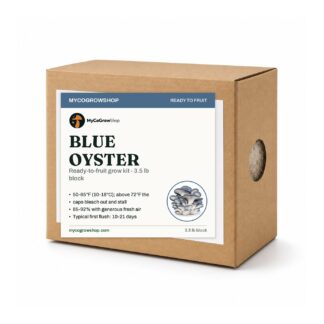 Beginner Mushroom Grow Kits
Blue Oyster Mushroom Grow Kit
$34.95 Add to cart -
Ready to fruit
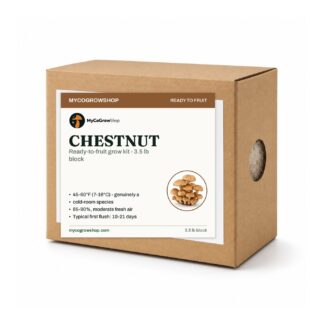 Mushroom Grow Kits
Chestnut Mushroom Grow Kit
$37.95 Add to cart -
Ready to fruit
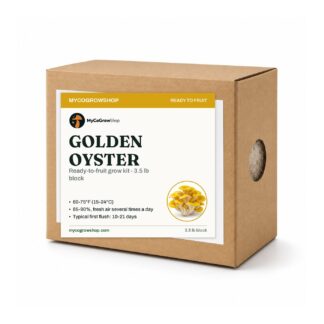 Beginner Mushroom Grow Kits
Golden Oyster Mushroom Grow Kit
$34.95 Add to cart -
For texture
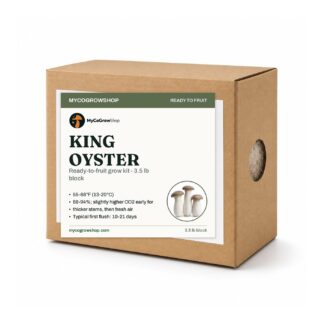 Mushroom Grow Kits
King Oyster Mushroom Grow Kit
$39.95 Add to cart
Not sure which kit fits your space?
Tell us the room, the temperature and how often you will actually mist it. We will point you at the variety that behaves - or talk you out of buying anything.
-
Beginner pick
Where to go next
Background reading we rely on: the FreshCap substrate guide.
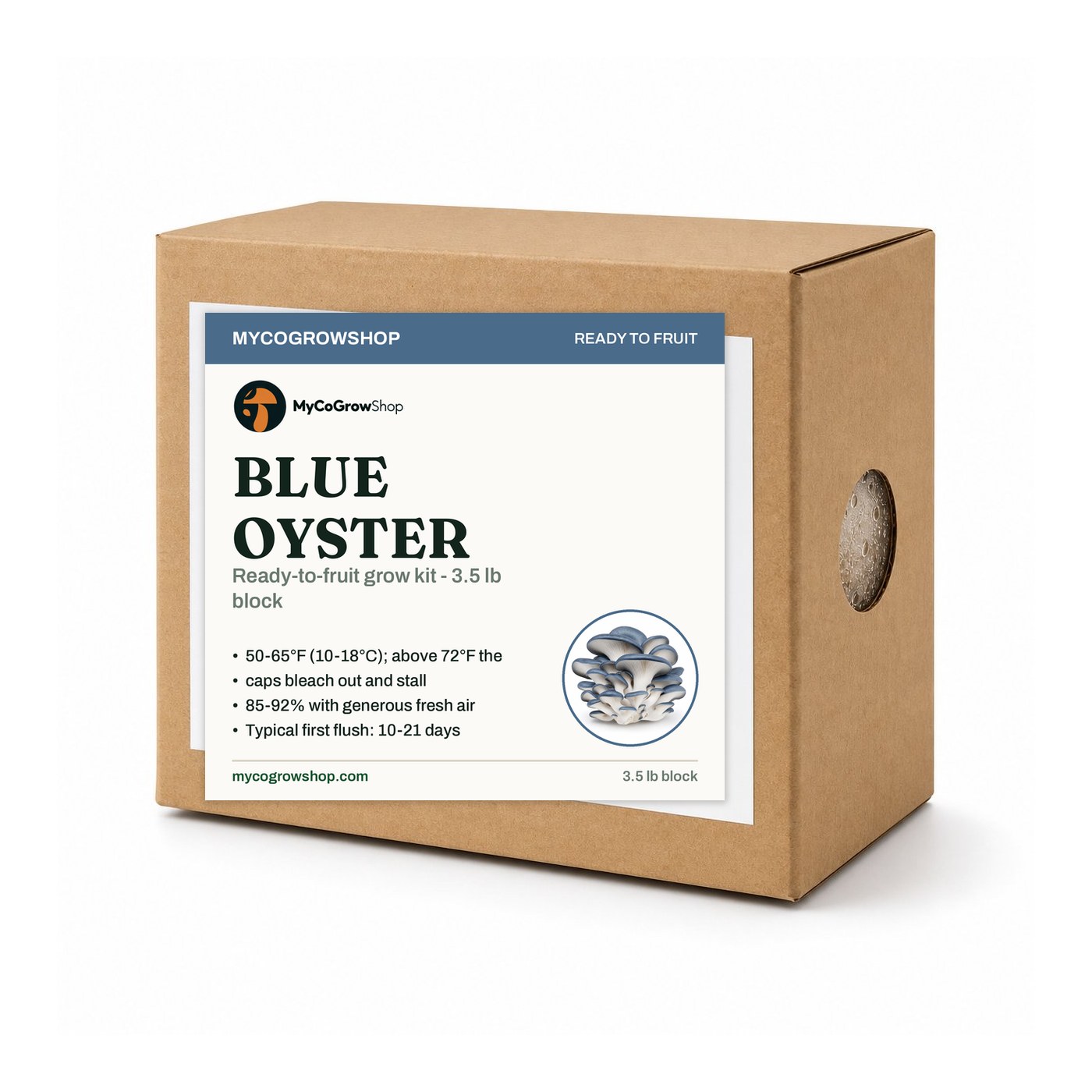
How to Grow Mushrooms at Home is listed with the same numbers the label uses, so the pack can be checked against the page it arrived from.
Quick answers on how to grow mushrooms at home
Open the pack only when the substrate or block is fully colonised; keep it out of direct sun; and change the air before you change the temperature – in that order, how to grow mushrooms at home behaves.
How to Grow Mushrooms at Home
Short version: pick a ready-to-fruit kit or an all-in-one bag, give it a cool bright corner, keep the air humid and moving, and cut the cluster at the right stage. Everything else on this page is the detail that decides whether your first grow feeds you or disappoints you.
Step 1 – choose the starting point, not the mushroom
- Never grown anything, want mushrooms this week: a ready-to-fruit kit (blue or pink oyster, or lion’s mane)
- Comfortable with a spray bottle and a two-week wait: an all-in-one grow bag, spawn included
- You already make grain spawn or want to run many bags: sterilised substrate bags plus spawn
- You have a garden and years: shiitake plug spawn for hardwood logs
Step 2 – set up a place, not a project
One shelf, out of direct sun, off a heating vent, with a thermometer on it. A plastic tub over the block works as a humidity tent; a folded lid propped with a kitchen roll works as a compromise. If the room runs above 78°F in summer, pick pink oyster or reishi, or wait for autumn.
Step 3 – the three jobs that matter
- Humidity: mist the air and the box walls twice a day once pins appear; standing water on pins is worse than dry air
- Fresh air: open the lid fully two or three times a day. Stale air is the number one cause of long, thin, pale, crowded growth
- Temperature: stay inside the band on your product page. Shiitake needs a cold, wet shock to pin; oysters just need cool air
Step 4 – harvest, rest, repeat
Cut the whole cluster at the base with a clean knife, at the stage described on the product page – before it spends itself dropping spores. Rest the block 3-5 days, no watering, then resume. Most blocks give one more flush. Then the substrate goes in the garden, not the bin.
The long versions live in the beginner guides: your first grow week by week and why flushes fail.
Start with a ready-to-fruit kit
-
Beginner pick Beginner Mushroom Grow Kits
Blue Oyster Mushroom Grow Kit
$34.95 Add to cart -
Ready to fruit Mushroom Grow Kits
Chestnut Mushroom Grow Kit
$37.95 Add to cart -
Ready to fruit Beginner Mushroom Grow Kits
Golden Oyster Mushroom Grow Kit
$34.95 Add to cart -
For texture Mushroom Grow Kits
King Oyster Mushroom Grow Kit
$39.95 Add to cart
Not sure which kit fits your space?
Tell us the room, the temperature and how often you will actually mist it. We will point you at the variety that behaves - or talk you out of buying anything.