

Best Mushrooms for Beginners The Best Mushrooms to Grow at Home for First-Time Cultivators Pink, blue, golden, king, lion’s mane, shiitake, reishi, chestnut – ranked by forgiveness, speed, room temperature and what they taste like..
Best Mushrooms for Beginners: what this page covers
- Judge a variety by your room, not by the photo – Almost every failed first grow is a mismatch between a species and a space, not a lack of skill.
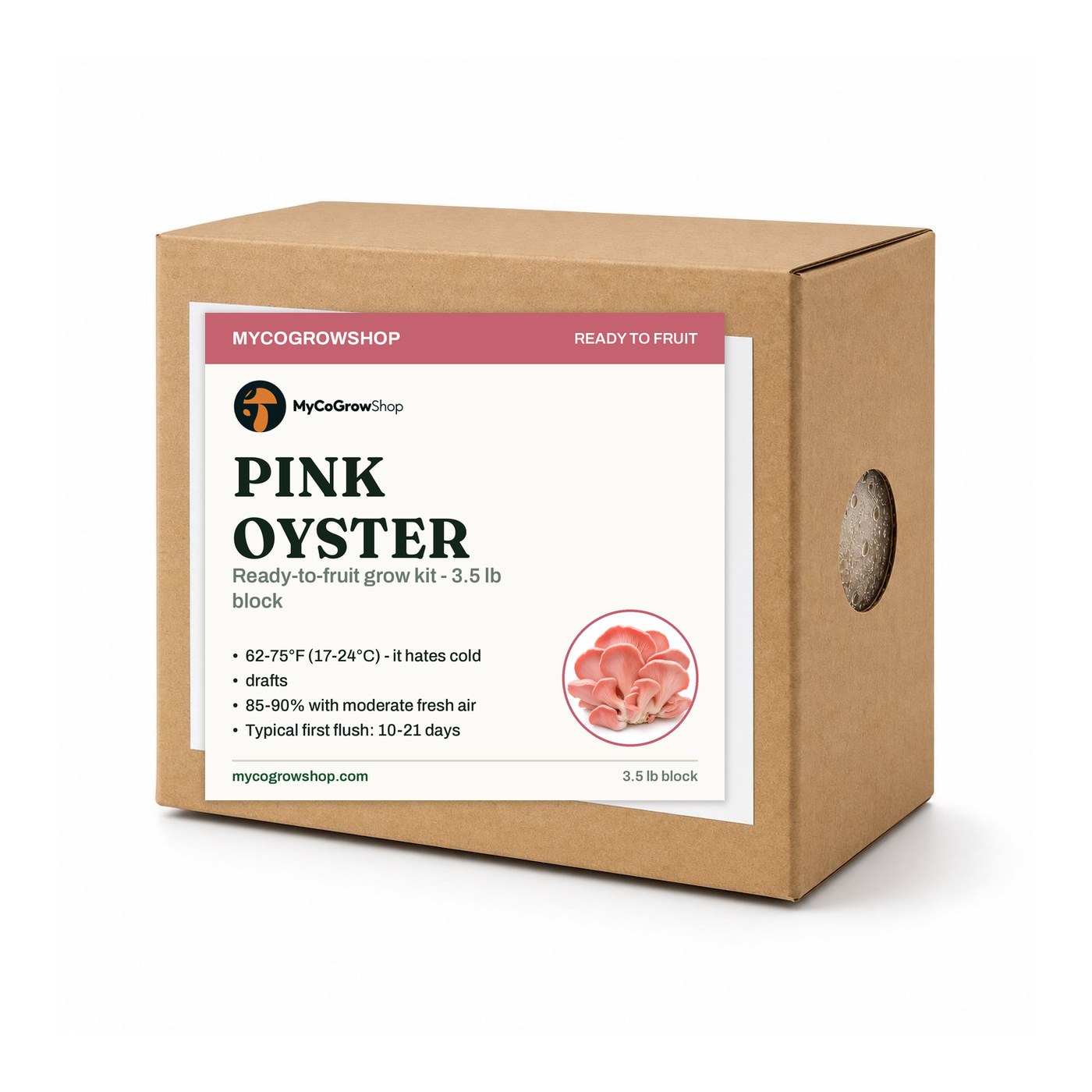
- Pink oyster – fastest, most forgiving, warm-room friendly – Colonises in a little over a week, pins as soon as it sees fresh air, and is happy at 62-75°F where most species stall.
- Blue oyster – the cool-room specialist – Does well at 50-65°F, which makes garages, porches and unheated spare rooms usable.
- Golden oyster – fragrance and a small, fast bouquet – Warm-room tolerant, sweet-smelling, best picked young at one to three inches.
- Lion's mane – the kitchen result most people keep – Not much harder than an oyster, but it wants a supplemented hardwood block rather than straw, and heavy fresh air or the spines go long and thin.
- Shiitake – slower, longer-lived, worth the patience – Takes weeks to colonise and needs a cold, wet trigger to pin – a 12-24 hour cool soak plus a temperature drop.
- King oyster and chestnut – the second grow, not the first – Both are good eaters and both reward attention.
Where to go next
Background reading we rely on: the FreshCap substrate guide.
Best Mushrooms for Beginners is listed with the same numbers the label uses, so the pack can be checked against the page it arrived from.
Quick answers on best mushrooms for beginners
Open the pack only when the substrate or block is fully colonised; keep it out of direct sun; and change the air before you change the temperature – in that order, best mushrooms for beginners behaves.
If best mushrooms for beginners is the wrong starting point for you, the archives above are the other routes through the shop.
The Best Mushrooms to Grow at Home for First-Time Cultivators
Pink, blue, golden, king, lion’s mane, shiitake, reishi, chestnut – ranked by forgiveness, speed, room temperature and what they taste like.
Judge a variety by your room, not by the photo
Almost every failed first grow is a mismatch between a species and a space, not a lack of skill. Before you pick a flavour, pick a temperature band: is your flat 64°F in winter or 78°F in summer? Do you have a cool, bright stairwell, or one warm shelf by the kitchen? Then choose from the list below.
Pink oyster – fastest, most forgiving, warm-room friendly
Colonises in a little over a week, pins as soon as it sees fresh air, and is happy at 62-75°F where most species stall. Downsides: a colour that fades as caps mature, and mushrooms that need cooking within a couple of days. If you want to see something happen this week, this is the one.
Blue oyster – the cool-room specialist
Does well at 50-65°F, which makes garages, porches and unheated spare rooms usable. Same forgiving habit as pink, longer shelf life, deep slate-blue caps in cool bright air. It sulks in a hot July flat – if your summer indoors runs above 78°F, grow oysters in autumn or winter.
Golden oyster – fragrance and a small, fast bouquet
Warm-room tolerant, sweet-smelling, best picked young at one to three inches. Petals bruise easily, so it needs a gentle mist rather than a hard spray. Excellent in a hot dry pan and the best oyster for pickling.
Lion’s mane – the kitchen result most people keep
Not much harder than an oyster, but it wants a supplemented hardwood block rather than straw, and heavy fresh air or the spines go long and thin. Harvest white and dense, saute in butter and it beats anything in the supermarket. Slow to show a second flush but usually gives one.
Shiitake – slower, longer-lived, worth the patience
Takes weeks to colonise and needs a cold, wet trigger to pin – a 12-24 hour cool soak plus a temperature drop. In return you get the most reliable cooking mushroom for a cold house, a block that flushes three or four times over months, and a spent block that can go outside.
King oyster and chestnut – the second grow, not the first
Both are good eaters and both reward attention. King oyster wants restricted air early for fat stems, then fresh air, and fruits in a narrow cool band; chestnut is slow to colonise and genuinely wants 45-60°F to fruit well. If your first grow went fine, these are the natural next step.
Reishi – a different hobby in the same box
Warm, patient, not a dinner mushroom. You grow it for tea and tincture. Its shape follows your airflow: closed bag gives knobbly antlers, open air gives lacquered brackets. Mould struggles to compete with it, which is why it suits a hot summer room where oysters give up.
A simple way to choose
- Cool house, first grow: blue oyster kit
- Warm house, first grow, quick result: pink oyster kit
- You want the best thing you can eat: lion’s mane kit
- You will accept slow for flavour: shiitake
- You have a cool cellar and want a keeper: chestnut
Next: how to grow mushrooms at home, all-in-one grow bags explained and the full catalogue. Any question a guide cannot answer, email [email protected].